
The Ghirza Digital Archive
Our second digitised collection, documenting the extensive and detailed survey (plus some selective excavations) of the Romano-Libyan settlement of Ghirza, is now available online and Open-Access via the Archaeology Data Service.
The data in these collections relate primarily to Ghirza, which is located 250 km (150 miles) south-east of Tripoli, Libya, and about 130 km (80 miles) inland from the Gulf of Sidra.
Crucially, these collections also include material gathered during the same expeditions for other sites and locations across pre-desert Tripolitania.
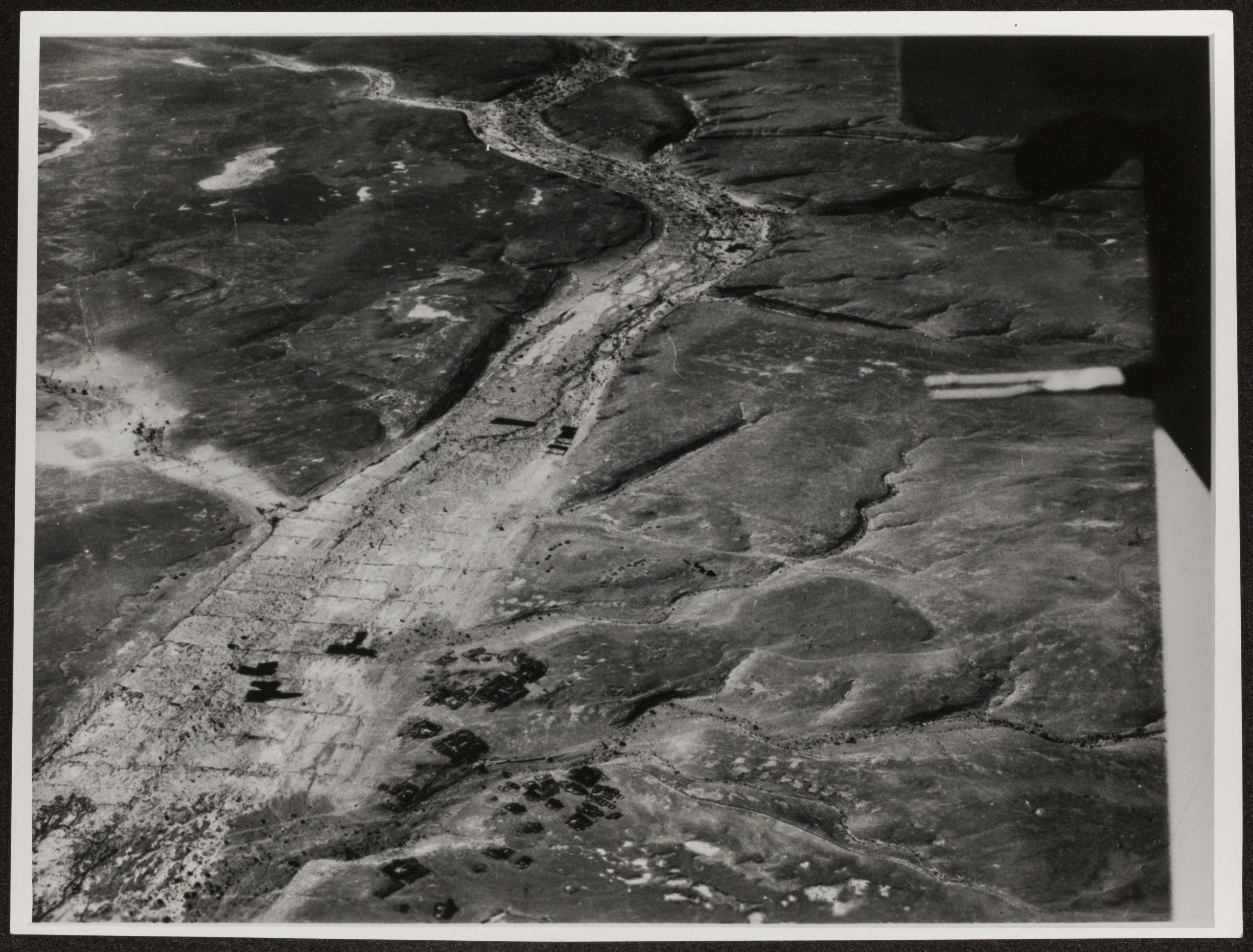
BILNAS/D1/11/1/1/6: Aerial photograph of Wadi Ghirza and settlement from the north-east.
The ruins of the settlement can be seen in the centre foreground. The wadi is crossed by the parallel lines of the Roman terrace walls. In the dark patches of the wadi are crops of barley, 1955-1957.
David J. Smith Papers on Tocra, Ghirza and other locations (11 March 1911 – 27 August 1987).
The Expeditions and the Site
Preliminary work at Ghirza was carried out by Olwen Brogan and David J. Smith in 1953. They subsequently led small-scale expeditions in collaboration with the Department of Antiquities of Tripolitania, taking place each spring from 1955-1957, for three to four weeks per season.
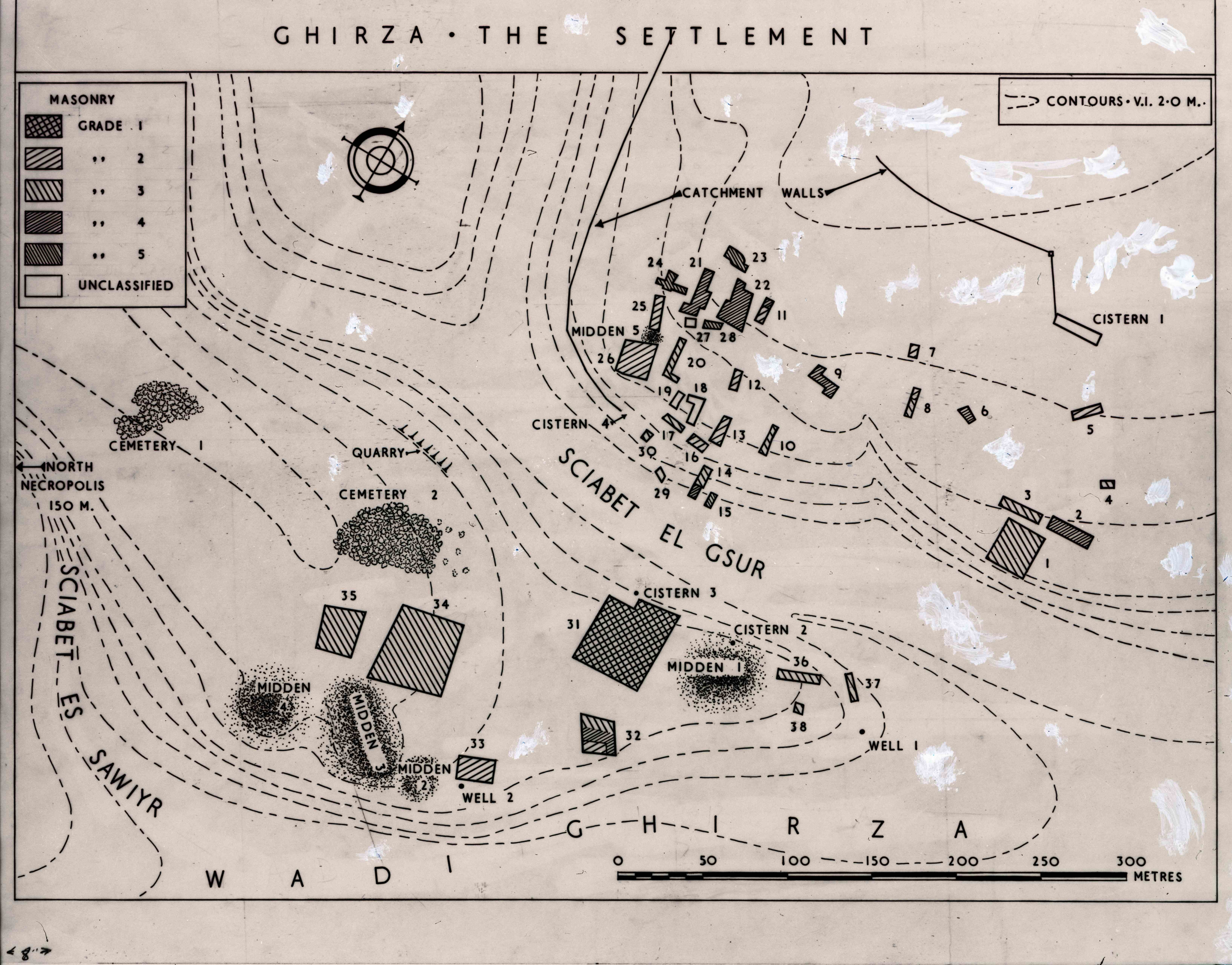
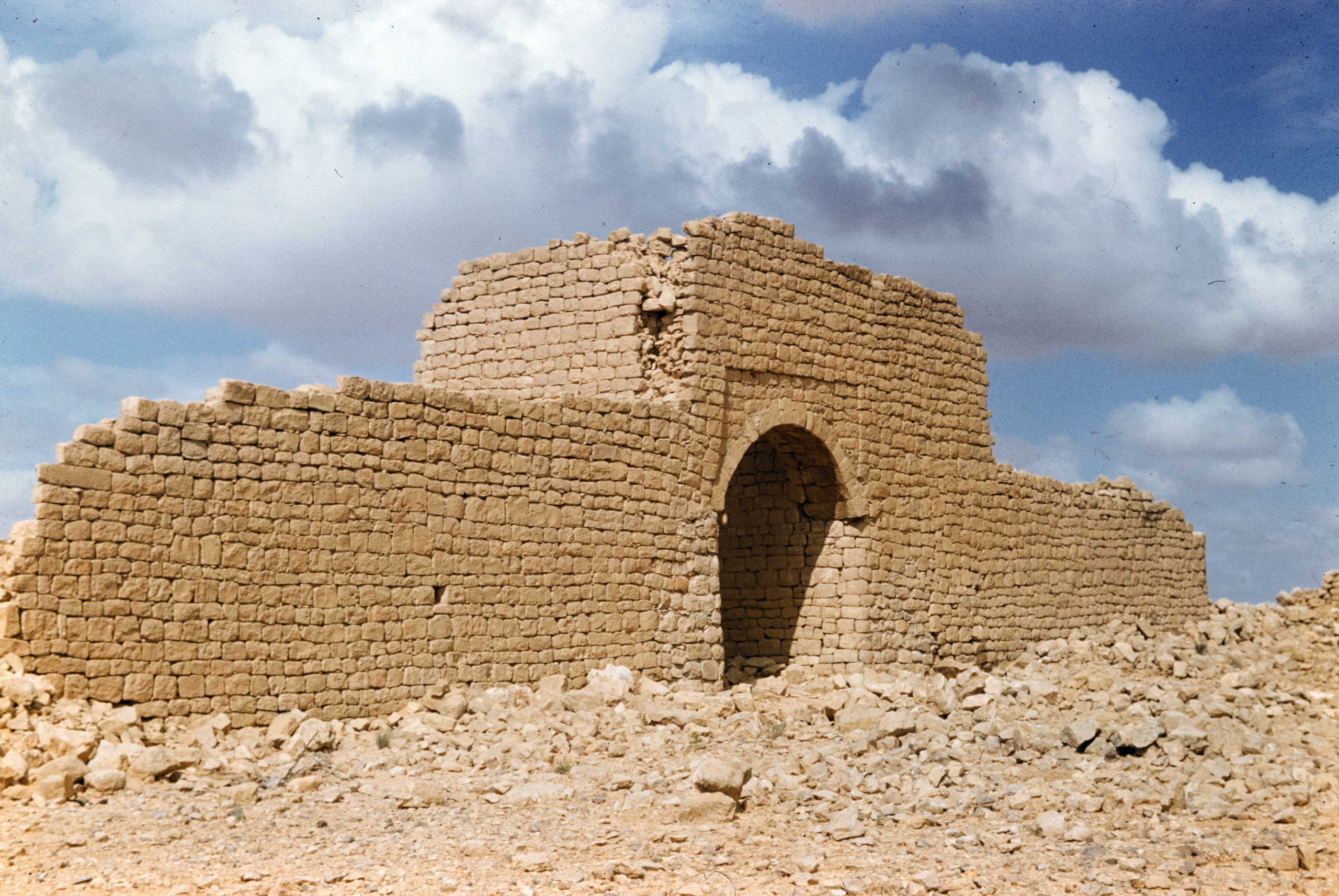
The survey encompassed a large settlement with approximately forty buildings, including associated middens, cemeteries, fourteen monumental tombs, and agricultural activity extending 3km along the Wadi Ghirza. The settlement structures ranging from small, one- or two-room dwellings to large castle-like buildings. Surface pottery and other evidence point to continuous occupation from the late third century A.D. to the early sixth century, with some evidence of an early Islamic reoccupation of parts of the settlement.
BILNAS/D1/3/4: Plan of Ghirza settlement, 19 February 1958. David J. Smith Papers on Tocra, Ghirza and other locations (11 March 1911 – 27 August 1987).
BILNAS/D41/2/8/18: Building 1, unidentified buildings, 1954-1963. Olwen Brogan Papers (19th cent-1989)
Notable Finds and Features
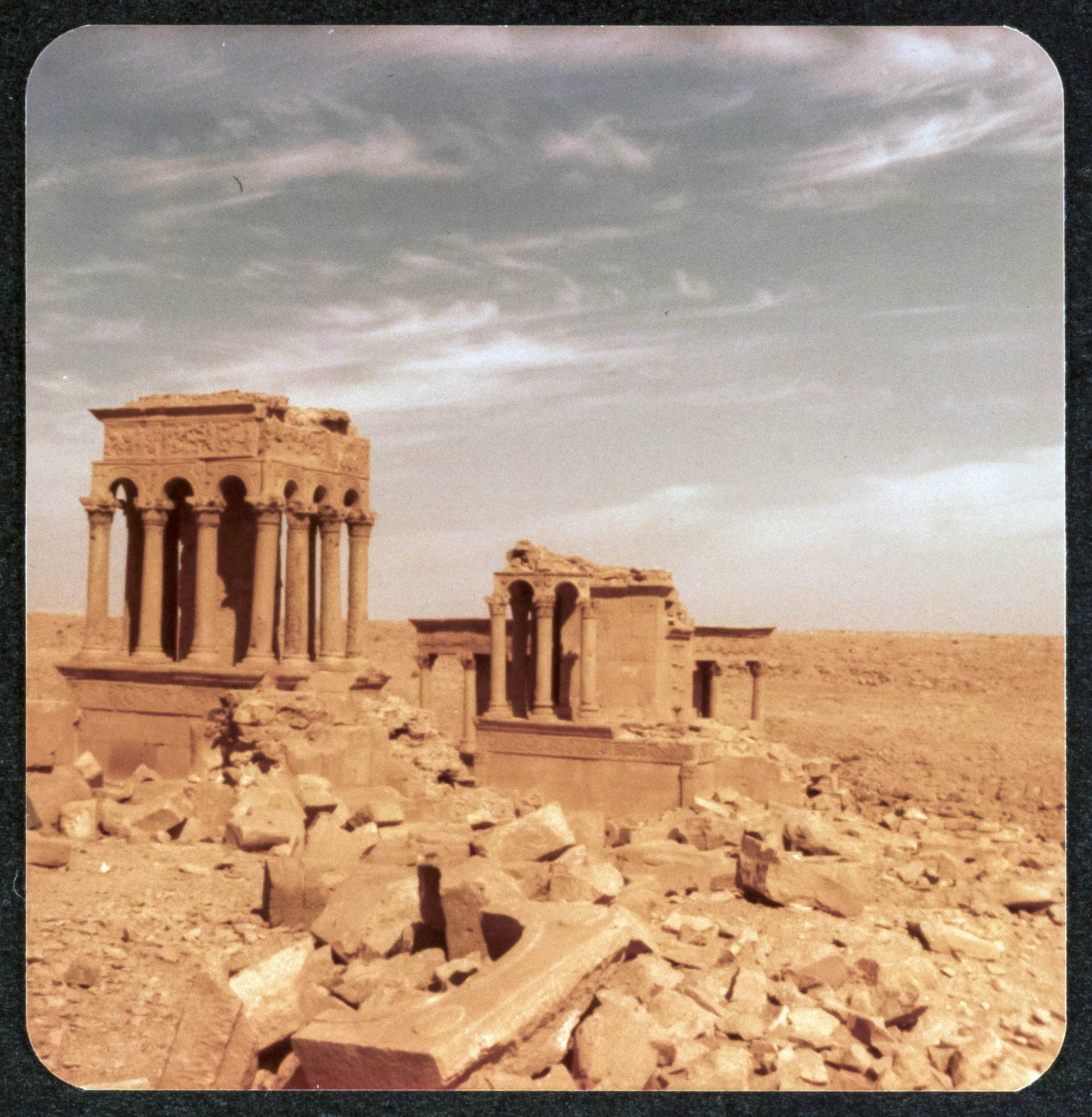
The monumental tombs are particularly notable. Influenced by classical architectural traditions, their relief carvings vividly depict scenes from contemporary local life alongside motifs from Graeco-Roman mythology. Latin inscriptions reveal that these impressive structures were commissioned by affluent Libyans, presumably the settlement’s leading inhabitants.
BILNAS/D41/2/7/8/8/22: North tombs: colour photograph, 1971. Olwen Brogan Papers (19th cent-1989)
Excavations also uncovered a fourth- and fifth-century temple of Semitic type. This building contained over twenty small stone altars, as well as stone offering tables similar to those found in the cemeteries.
BILNAS – TEMPLE
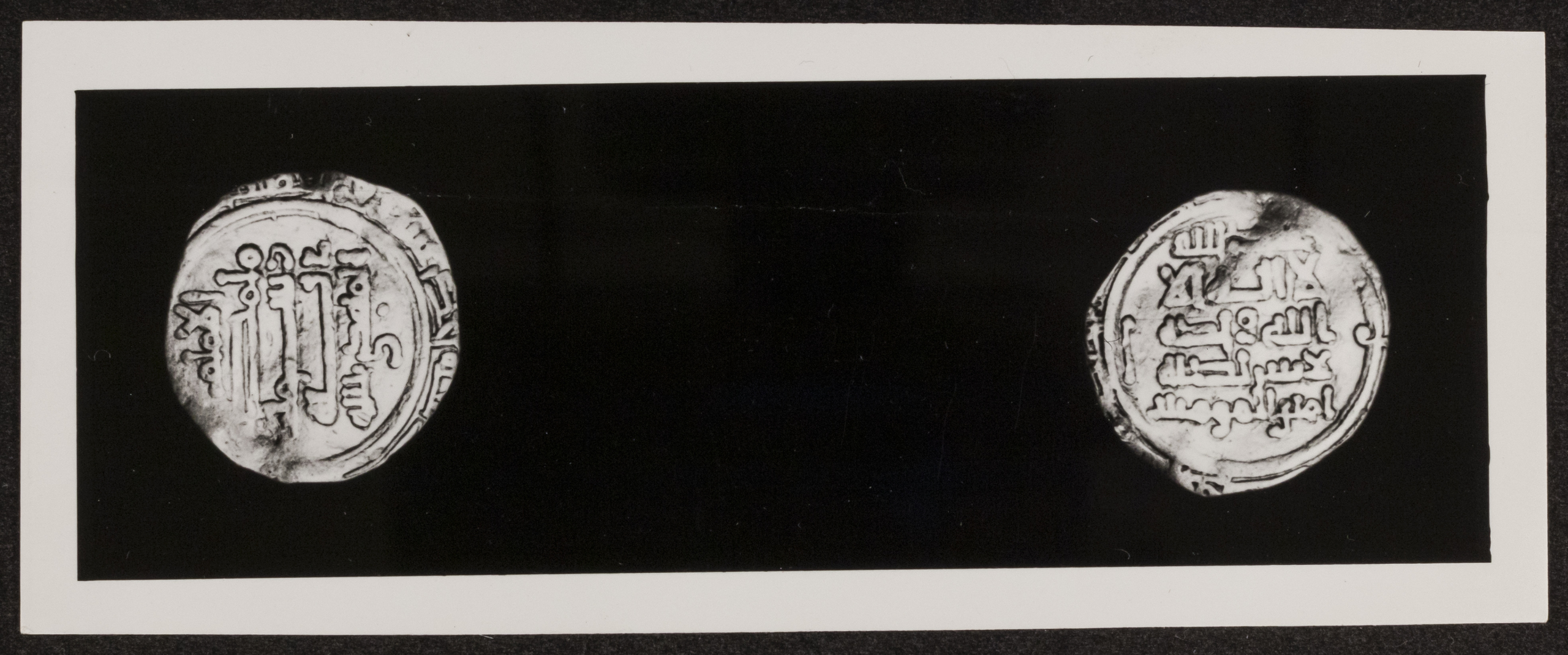
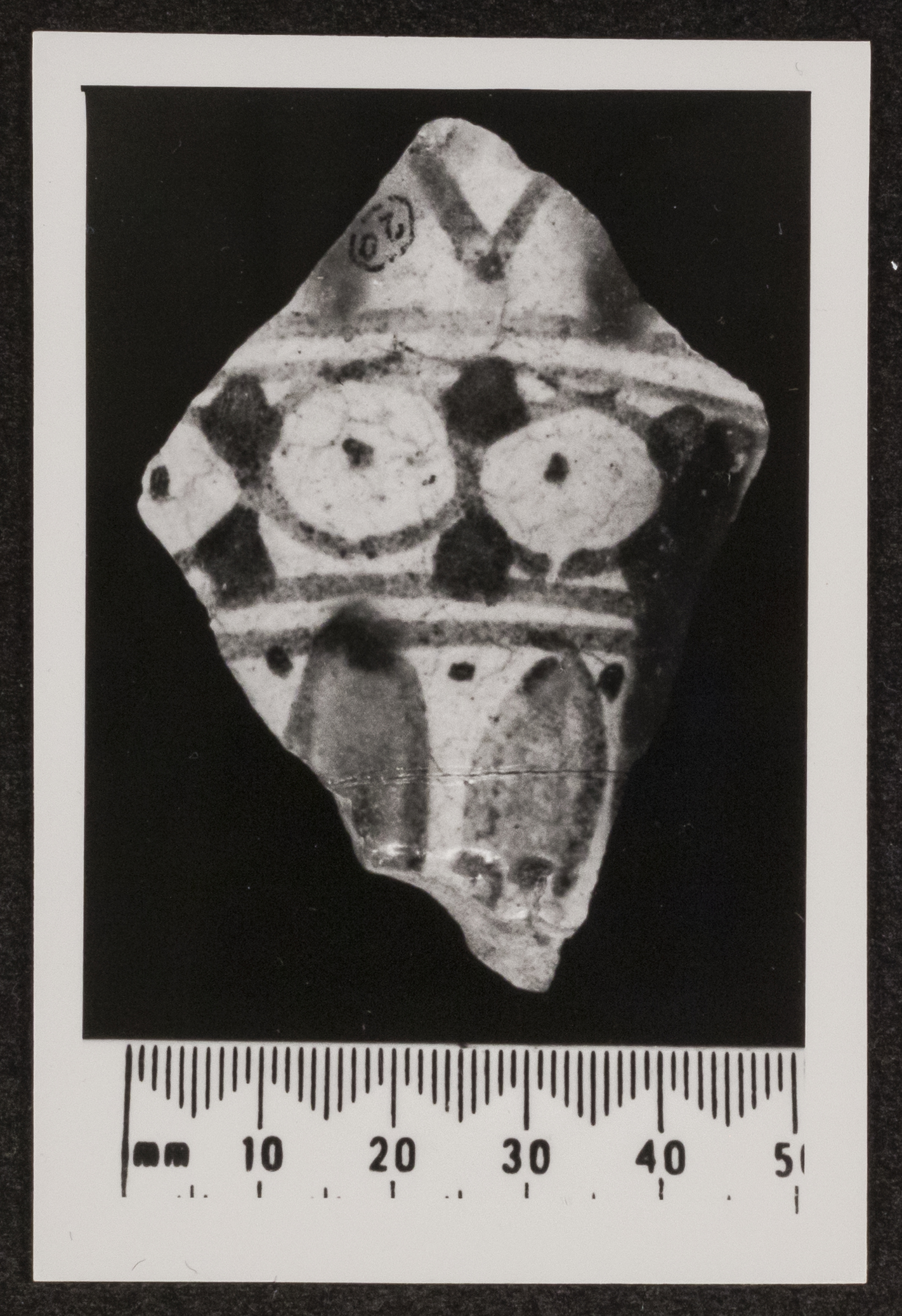
A medieval reoccupation of this building is attested by artefacts retrieved from the debris, including Fatimid and Zirid coins, painted and glazed pottery from the Qala’a of the Beni Hammad in Algeria, patterned textiles, and mirror-boxes. The surviving walls also bear numerous graffiti in Libyan characters.
BILNAS/D1/11/1/1/45: Islamic coin from Building 32. No. 78.2 silver coin in east room of Berber house (i.e., temple narthex) just below level of windows, 1956. David J. Smith Papers on Tocra, Ghirza and other locations (11 March 1911 – 27 August 1987)
BILNAS/D1/11/1/1/60: Islamic pottery from Building 32. Photo. ref. D1120. Published in Brogan, O. and Smith, D. (1984). Ghirza: A Libyan Settlement in the Roman Period. Plate 148, 1955 – 1957. David J. Smith Papers on Tocra, Ghirza and other locations (11 March 1911 – 27 August 1987)
The Collection’s Contents
The collection contains digitised correspondence, field notes, drawings, publication drafts, reports, maps, plans and photographic material. These materials represent a selection from the papers of Olwen Brogan, and, David J. Smith documenting their significant work at Ghirza and other locations in pre-desert Tripolitania.
Click the link and start exploring the collection today: Digital Archive from Ghirza: A Libyan Settlement in the Roman Period, 1953-1984 – The British Institute for Libyan and Northern African Studies (BILNAS), 2025. https://doi.org/10.5284/1131483