


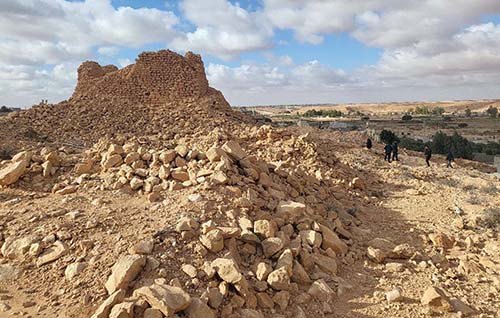
Archaeological sites worldwide face growing threats, increasing pressure on heritage managers to monitor and protect them, especially in remote areas. This talk presents the EAMENA Machine Learning Automated Change Detection (MLACD) tool, which uses satellite imagery and machine learning to detect disturbances near known sites. Results were validated through four field surveys by Libyan Department of Antiquities teams across Tripolitania, Cyrenaica, and Fazzan. Key threats identified include urban expansion, vegetation growth, looting and dumping. By combining remote sensing with field verification, this approach offers an efficient and reliable framework for monitoring and safeguarding archaeological heritage.
This event will take place online via the Zoom platform: REGISTER HERE
About the Speakers:
Ahmed Mahmoud
Ahmed Mahmoud is a Research Associate at the McDonald Institute for Archaeological Research, University of Cambridge. He holds a PhD in Remote Sensing and GIS from the University of Nottingham.
Muftah Alhddad
Muftah Alhddad is a Libyan archaeologist and professor of Archaeology and Ancient History at Az-Zaytuna University. His current research interests include the archaeology of Roman Tripolitania, ceramic production and typology, the development of a spatial-database for Libya’s cultural heritage and applying Machine Learning Automated Change Detection (MLACD) technology to detect threats and risks on archaeological sites.
Ahmed Buzaian
Ahmed Buzaian is an Assistant Professor of Archaeology who earned his PhD from the University of Leicester in 2019. His research interests include the Roman economy, field archaeology and excavation techniques, post-excavation analysis, and endangered archaeology, with a particular focus on North Africa.